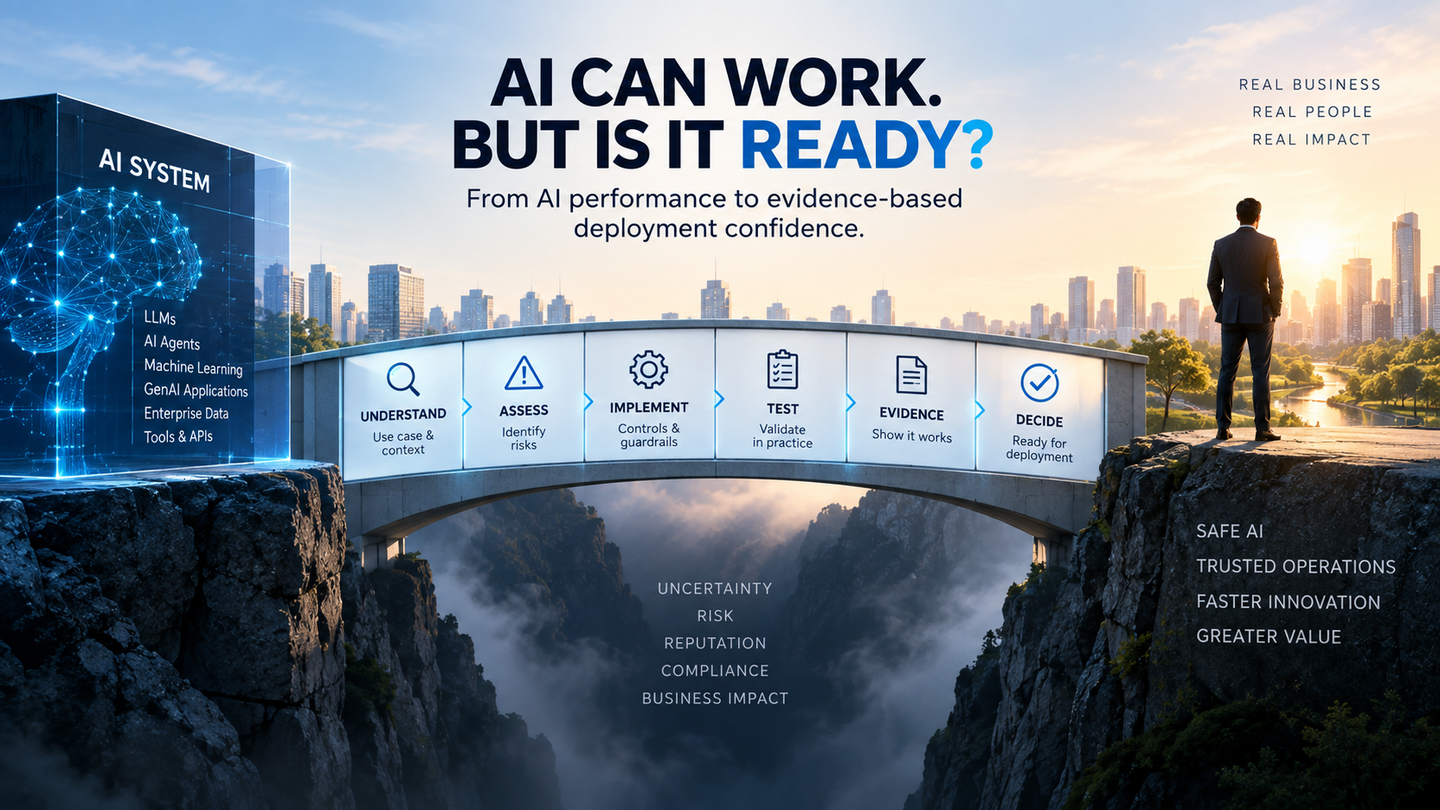
The next phase of responsible AI is moving from policies and risk assessments to testing, evidence, and defensible deployment decisions.
There is a question I increasingly hear when talking to organizations about AI:
“We have the policy. We have the risk assessment. We have mapped our AI program to the relevant frameworks. But how do we know this particular AI system is actually ready to go into production?”
That is a very different question.
And I think it points to where AI assurance is heading next.
For the past few years, the industry has understandably focused on AI governance.
Organizations are building AI inventories, policies, risk-management processes, responsible AI principles and management systems.
Standards such as ISO/IEC 42001 are helping organizations establish structured AI management systems, including processes for managing AI-related risks and opportunities.
Healthcare organizations are developing more specific approaches to responsible AI through initiatives such as the Coalition for Health AI (CHAI), which focuses on responsible development, deployment and oversight of AI in healthcare.
And as AI agents become capable of taking actions rather than simply generating information, standards such as AIUC-1 are introducing more technically focused requirements around security, safety, reliability, accountability and testing.
All of this is progress.
But something is still missing.
A Policy Is Not Evidence
Imagine a company deploying an AI agent to support customer operations.
The organization has an AI policy.
It has completed a risk assessment.
Security has reviewed the architecture.
The legal team has approved the data-processing arrangements.
The engineering team has run model evaluations.
On paper, this looks mature.
But then ask a different set of questions.
What happens if the agent receives a prompt injection?
Can it access information outside the user's authorization?
What happens if a tool returns unexpected data?
Can it execute an action it was not intended to perform?
Which decisions require human intervention?
Have those controls actually been tested?
Where is the evidence?
This is the difference between having governance and having assurance.
Governance tells us what should be in place.
Assurance asks whether we have enough evidence to rely on it.
Performance Is Not Assurance
One of the distinctions I think the industry needs to make much more clearly is:
Performance ≠ Assurance ≠ Authorization
A model can perform extremely well against a benchmark and still be unsuitable for a particular business use case.
Performance asks:
Does the AI work?
Assurance asks:
Can we rely on this AI in this context?
Authorization asks:
Should we allow this AI use case to operate under these conditions?
These are different questions.
Consider an AI system used to summarize clinical information.
Its accuracy may be excellent.
But that does not tell us whether the system has appropriate privacy controls, whether sensitive information can leak through prompts, whether users understand its limitations, whether human review is required, or whether the system is being used outside its intended purpose.
The model may perform well.
The use case may still not be ready.
That distinction is becoming increasingly important as AI moves into higher-impact business processes.
The Unit of Assurance Should Be the Use Case
This is where I believe AI assurance needs to evolve.
We often talk about assessing “the AI system.”
But the same model can be used for completely different purposes.
An LLM used to draft an internal email is not the same risk as the same LLM being used to recommend a financial decision.
An AI assistant that answers questions is not the same risk as an agent that can modify records.
A healthcare model used for administrative summarization is not the same risk as one influencing a clinical workflow.
The technology matters. But context matters just as much.
The practical unit of assurance therefore needs to become the AI use case.
Start with:
What does this AI do?
Then ask:
Who can be affected?
What decisions or actions can it influence?
What can go wrong?
Which controls are required?
How will those controls be tested?
What evidence will demonstrate that they work?
What residual risk remains?
Only then can we have a meaningful conversation about readiness.
Frameworks Are Converging Around the Same Problem
This is also why I don't see ISO 42001, CHAI and AIUC-1 as competing ideas.
They address different layers of the problem.
ISO 42001 provides an organizational management-system approach for responsible AI.
CHAI brings a healthcare-specific perspective to responsible AI governance, risk categorization and testing and evaluation.
AIUC-1 goes deeper into technical and operational controls for AI agents, including adversarial testing, unauthorized actions, harmful outputs, hallucinations and unsafe tool calls.
They are different pieces of a larger assurance picture.
And that is important because enterprises don't really have a “framework problem.”
They have a translation problem.
They need to translate broad requirements into something that can be applied to a particular AI system.
For example:
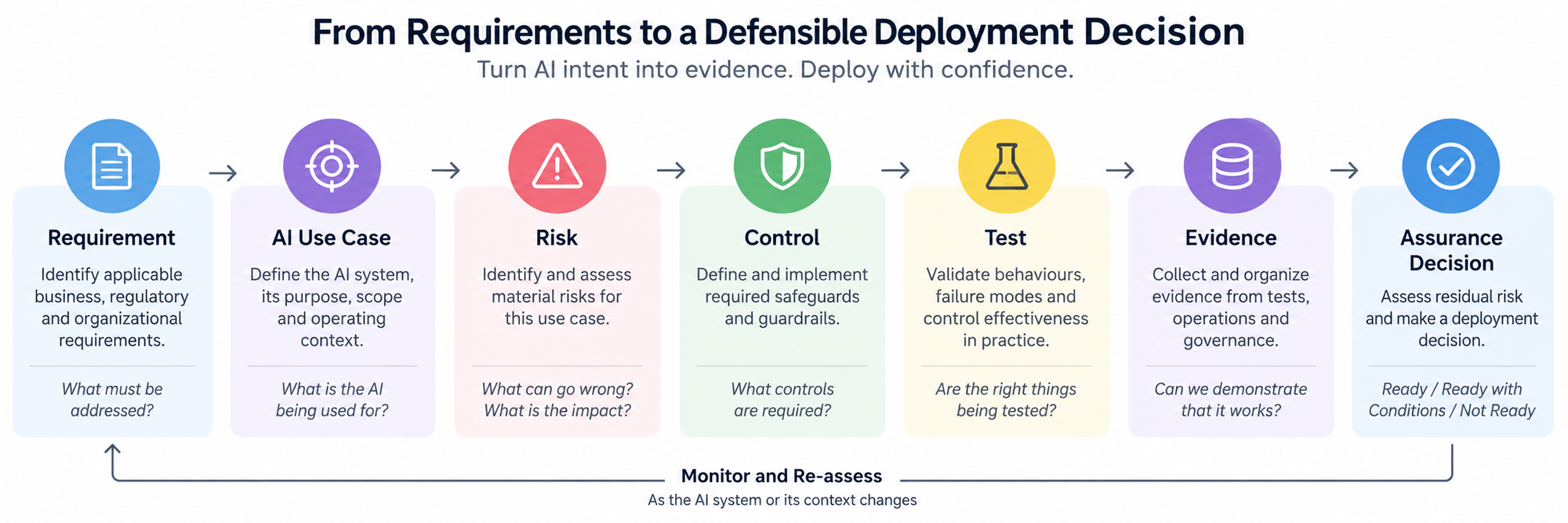
That chain is what turns governance into something operational.
AI Agents Make the Gap More Obvious
The problem becomes even clearer with agentic AI.
A chatbot primarily responds.
An agent can act.
It may retrieve information, call tools, interact with APIs, update records or execute multi-step workflows.
AIUC-1's current requirements reflect this shift, including controls for preventing unauthorized agent actions and testing tool calls for unintended behavior.
That changes the assurance question.
We can no longer ask only:
“Is the model accurate?”
We also have to ask:
“What is the agent allowed to do?”
And:
“What happens when it tries to do something it shouldn't?”
That requires a combination of governance and technical testing.
It also requires evidence.
The Missing Step Between Risk Assessment and Production
Most organizations already understand risk assessment.
The harder part is what comes next.
Suppose an assessment identifies unauthorized actions as a material risk.
The organization defines an authorization control.
Good.
But how do we know the control works?
We test it.
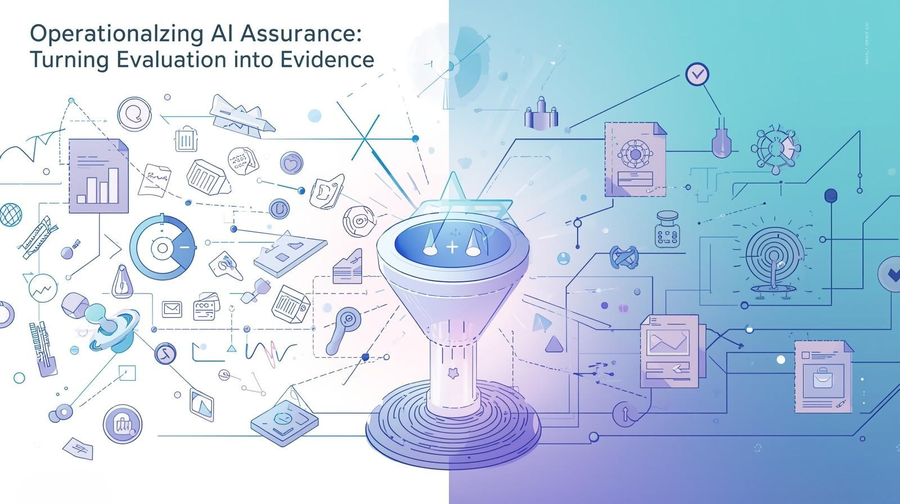
Then we collect the evidence.
Then we assess the effectiveness of the control.
Then we consider the residual risk.
Then someone needs to make a deployment decision.
This is where I think AI assurance becomes much more practical.
The output should not simply be a 70-page assessment saying, “Here are your risks.”
It should help answer:
Ready
The material risks have been adequately addressed and sufficient evidence supports deployment.
Ready with Conditions
Deployment may proceed, but specific safeguards, monitoring or remediation conditions apply.
Not Ready
Material risks, control gaps or evidence deficiencies prevent deployment.
That is much closer to the decision a CIO, CISO, CRO, product leader or risk committee actually needs to make.
The CognitiveView model is built around this progression from use-case and context through risk, controls, testing, evidence and assurance, followed by authorization and continuous monitoring.
Assurance Cannot Be a One-Time Event
There is another uncomfortable reality.
AI changes.
Models change.
Prompts change.
Data changes.
Agents gain new tools.
Permissions change.
Business processes change.
Regulations change.
So even a good assessment eventually becomes a historical snapshot.
This is why AI assurance needs to become a lifecycle.
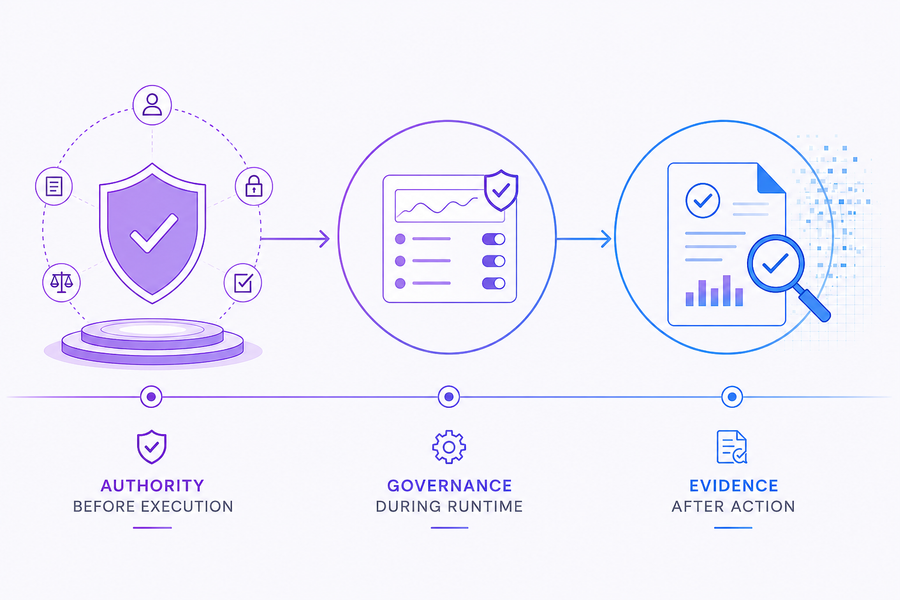
Register. Assess. Govern. Prove. Assure. Authorize. Monitor.
The objective is not to create another annual compliance exercise.
It is to establish a repeatable assurance process that can respond when the AI system or its operating context changes.
The Question Is Changing
I think the AI governance conversation is about to move from:
“Do you have an AI governance program?”
to:
“Show me how you know this AI system is safe, reliable and appropriate for this use case.”
Those are very different questions.
The first can be answered with policies, processes and organizational structures.
The second requires evidence.
That does not make governance less important.
It makes governance more accountable.
ISO 42001, CHAI, AIUC-1, NIST AI RMF and emerging regulatory requirements will continue to provide important foundations for responsible AI.
But organizations will still need to connect those requirements to the AI systems they actually deploy.
Ultimately, responsible AI is not just about having the right framework.
It is about being able to demonstrate that the specific AI use case has been understood, its material risks have been addressed, its controls have been tested, and enough evidence exists to make a defensible deployment decision.
That is the next step in AI assurance.
Not just asking whether the AI works.
Asking whether we can prove it is ready.